
Selecting an appropriate solar panel is not the only factor that you have to consider when deciding on whether to go solar or not.
It may also be essential to know how the solar energy you generate will be measured and settled against the power grid.
Net metering in India It is an arrangement through which the accounting of any excess solar power will be done. No matter whether you are living in a house or running a business establishment, it will help you in making wise decisions regarding your electricity expenses. Several homeowners and business operators know how to produce solar energy but lack knowledge about how they manage the excess energy that they don’t use.
What Is Net Metering?
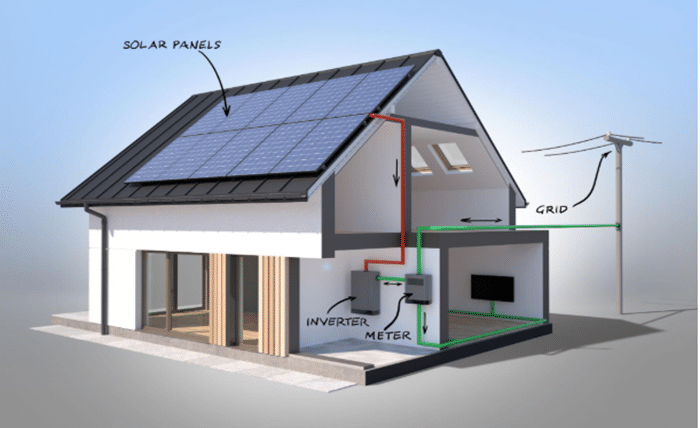
With net meters for homeowners and factory owners, you use electricity produced by your rooftop solar system in your home, office, commercial building, or factory. The extra electricity generated by your solar system above your current requirement will be transmitted to the power grid.
If the electricity generated is less than the demand in your household and commercial building, you get electricity from the power grid.
A bidirectional meter measures all this. The electricity being imported and the eligible electricity, which is exported, is taken into consideration under the rules that apply in those particular states and DISCOMs. There may be differences in how credit carryforward, unused credits, and surplus generation are handled.
This makes rooftop solar quite helpful for the residential and commercial electricity consumers due to the presence of the grid, which complements your solar system.
Innovel considers electricity consumption patterns, rooftop conditions, system requirements, and applicable DISCOM regulations when planning a solar system.
What Is Gross Metering?
In case of gross metering, the energy generated from the rooftop solar plant is exported to the grid, not used to offset the electrical consumption from the rooftop plant itself.
The DISCOM then accounts for the solar export based on the tariff rates and guidelines of that particular state. However, the homeowner or business owner still pays for the electrical consumption from the grid.
Therefore, solar generation and electricity consumption in the house are viewed as two different processes here.
Both homeowner and business owner need to take this into consideration when they decide to have a rooftop solar panel installed on their property.
Net Metering vs Gross Metering
The most straightforward approach in net metering vs gross metering would be to examine how the electricity generated by the sun is utilized.
| Net Metering | Gross Metering | |
| Solar Electricity | Used by the property first; surplus can be exported to the grid. | The entire generation is exported to the grid. |
| Consumption | Electricity can be imported from the grid when solar generation is insufficient. | Electricity consumption continues through the grid. |
| Settlement | Eligible exports are accounted for against imports according to applicable rules. | Solar generation is settled separately according to the applicable tariff. |
| Based on the total net consumption of electricity. | Grid electricity consumption and solar generation are accounted for separately. | |
| Key Consideration | Consumption pattern and applicable net-metering rules. | Applicable generation tariff and gross-metering rules. |
For instance, in the case of the production of 10 kWh of power from solar energy and the consumption of 7 kWh of power within a certain period of time, the balance of 3 kWh can be fed into the grid with a net metering system. It depends on the state and DISCOM policies on how the 3 kWh can be handled.
The Ministry of New and Renewable Energy explains this difference in its guidelines on rooftop solar system.
Which Option Makes More Sense?
No universal solution exists across all properties.
For many , net metering in India may appear as a good option, as it directly saves the money paid for electricity supplied from the power grid. But the details that will be offered to a particular customer will depend on the state, DISCOM, capacity of the system, category of the consumer, and existing regulations.
The choice should therefore be based on the electricity consumption of the property, be it residential or commercial; the proposed solar system; and the local metering framework rather than on the metering arrangement alone.
Why Your Daytime Consumption Matters
The usage of electricity during the daytime in the net-metered may impact how much of the generated solar electricity will be used in the house.
Some households use electrical appliances like air conditioners, washing machines, and water pumps, and others might use the electricity during the daytime, and hence the generated electricity from solar panels could be directly used for these electrical loads. Commercial and industrial properties also use good amounts of electricity to run machineries and other .
Checking previous utility bills and consumption patterns in the house may prevent oversizing or undersizing the solar panel system.
What Happens During a Power Cut?
An average rooftop solar system, which is connected to the grid, will not offer backup power during an outage in the grid.
This is because the average grid-connected system will stop working in case of a grid failure due to safety reasons.
Homeowners and business owners who require backup can consider an off-grid or hybrid system depending on their electricity needs and site conditions.
The Right Metering Choice Starts With the Right Solar Design
Net metering and gross metering do not simply refer to the technologies themselves but affect how a property owner harnesses his solar energy and records his electricity output.
Net metering in India is important to understand the local regulation and processes at the DISCOMs before setting up metering systems, as they differ in each place.
Innovel, a solar energy service company, the procedure encompasses site assessment, system design, documentation, installation, and metering process wherever it applies to help make the journey from solar plan to solar savings easier.
A rooftop solar system can be made to work most effectively only when all factors related to panels, both residential and commercial consumption, the grid, and the metering system are taken into consideration. For property owners, this means that making the right choice depends not only on creating more electricity but also on utilizing it efficiently.
FAQs
- Define net metering and gross metering.
With net metering, electricity from the solar panels on your rooftop that qualifies for net metering will be taken into account with regard to the electricity that you have purchased from the grid based on the rules applicable. With gross metering, solar power generation will be considered separately; the electricity generated by the rooftop panels will be exported and billed based on the rule applicable, whereas the household electricity will be billed normally.
- Can I do net metering for my rooftop solar in residential and commercial areas in India?
Yes, but you have to comply with the regulations related to your state and DISCOMs.
- Will I stop receiving any electricity bill with rooftop solar?
Although it is true that using solar power will definitely help reduce electricity bills, there will be some fixed costs and other costs as well.


