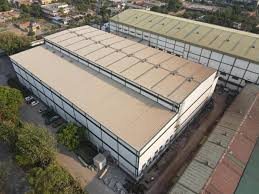
Primary markets in India have entered a busy September window, and one of the larger book-built offers now open for bidding comes from a Meerut-based transformer manufacturer with more than five decades of operating history. The Kanohar Electricals IPO opened for subscription on 8 September 2026 and remains available to bidders until 10 September 2026, with a total issue size of ₹1,055.74 crore. For readers of unfoldedstars.in tracking this week’s primary market calendar, the essentials of the offer are set out below in plain terms.
What the Company Actually Does
Incorporated in 1972, Kanohar Electricals manufactures transformers used across power transmission, railways, renewable energy and power distribution. Its product slate covers:
- Power transformers and distribution transformers
- Traction transformers and Scott transformers used in rail electrification
- Shunt reactors for voltage management on transmission networks
Alongside manufacturing, the company runs an engineering, procurement and construction (EPC) segment that builds substations and transmission lines — a combination that ties its fortunes closely to India’s grid modernisation cycle.
The Structure of the Offer
The issue blends fresh capital with an exit for existing holders. A fresh issue of roughly ₹300 crore will flow to the company itself, while an offer for sale of about ₹755.74 crore (1,19,57,915 equity shares of ₹2 face value) goes to selling shareholders. That split matters: only the fresh portion strengthens the balance sheet, whereas the offer-for-sale component simply changes who owns the shares.
Pricing and application mechanics follow the standard book-building route. Anyone comparing this offer against the broader pipeline of public issues can study the wider market context on the dedicated ipo section maintained by Kotak Neo, where issue pages typically consolidate dates, price bands and prospectus-sourced details in one place.
Price Band, Lot Size and Minimum Application
The numbers every applicant needs before placing a bid:
- Price band: ₹601 to ₹632 per equity share (face value ₹2)
- Lot size: 23 shares per lot
- Minimum retail application: ₹14,536 at the upper end of the band
- Reservation: 50% for qualified institutional buyers, 15% for non-institutional investors, 35% for retail bidders
Applications can be made in multiples of one lot, subject to the ceiling that applies to each investor category.
The Timeline From Bid to Listing
- Subscription window: 8–10 September 2026
- Basis of allotment: expected 11 September 2026
- Refunds and demat credit: around 15 September 2026
- Tentative listing: 16 September 2026 on both BSE and NSE
Nuvama Wealth Management and IIFL Capital Services are acting as book-running lead managers to the issue.
Financial Snapshot Worth Noting
The company’s recent numbers show a steep growth curve. Revenue climbed from ₹457.30 crore in FY25 to ₹662.86 crore in FY26, while profit after tax more than doubled from ₹65.12 crore to ₹129.73 crore over the same period. Growth of that pace usually reflects strong order execution in the transformer industry, which has been running at elevated capacity utilisation as grid spending, renewable integration and rail electrification programmes expand.
Points a Careful Reader Should Weigh
No public issue should be judged on headline numbers alone. Sensible questions include how dependent revenue is on a small set of utility customers, how raw material costs (copper, CRGO steel) affect margins, and how much of the demand tailwind is already reflected in the asking valuation. The red herring prospectus, filed with SEBI, remains the authoritative document for risk factors, litigation disclosures and the fine print of the offer, and reading it before bidding is always time well spent. Grey market indications circulate widely during subscription windows, but they are informal, unregulated and can shift sharply within a single session — treat them as sentiment noise rather than a forecast.