
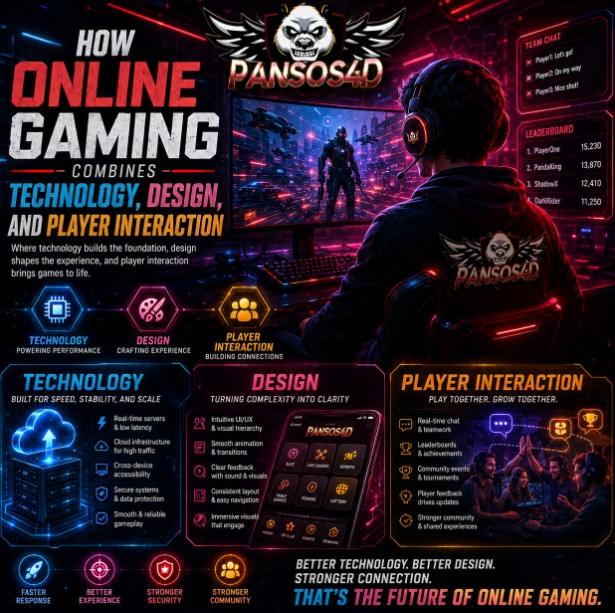
Online gaming has developed into a sophisticated form of digital entertainment where software engineering, visual design, and human interaction work together. A modern game is no longer defined only by its rules or objectives. Its performance, interface, responsiveness, social features, and visual presentation all contribute to how players experience it.
Behind every smooth animation or instant response is a combination of technology and design decisions. At the same time, player behavior influences how platforms improve interfaces, introduce new features, and create more interactive digital environments.
Technology Forms the Foundation of Online Gaming
Technology provides the infrastructure that allows online games to operate quickly and consistently. Developers rely on game engines, cloud systems, databases, networking technologies, and optimized software to process large numbers of actions.
Real-Time Processing and Connectivity
Many online games require information to move between players and servers almost instantly. When someone selects an option, moves a character, or interacts with an interface, the system needs to process the action and display the result with minimal delay.
Stable servers and efficient networking help support:
- Fast loading times
- Responsive controls
- Real-time multiplayer interaction
- Automatic synchronization
- Reliable game-state updates
Cloud infrastructure has also made it easier for gaming platforms to handle changing levels of traffic without requiring every process to run directly on the user’s device.
Cross-Device Accessibility
Modern gaming environments are increasingly designed for smartphones, tablets, laptops, and desktop computers. Responsive development allows interfaces to adjust to different screen sizes while keeping menus, controls, and important information accessible.
This flexibility has encouraged developers to think beyond a single device when designing games.
Design Turns Technology Into an Experience
Powerful technology alone does not make an online game engaging. Players interact with what they see, hear, and understand, making user experience design an equally important part of development.
Visual Hierarchy Guides Attention
Visual hierarchy becomes more important as the number of visible actions increases. During a review of the public PANSOS4D homepage, five prominent paths appeared near the top of the page, covering main access, registration, alternative access, live information, and a promotional feature. This creates a practical design challenge because essential access controls must remain distinguishable from secondary options.
The example shows why consistency is not merely aesthetic. Clear labels, deliberate spacing, and predictable button treatment help users identify primary actions and reduce unnecessary effort when navigating a multi-feature gaming interface.
Animation and Sound Provide Feedback
Animation serves more than a decorative purpose. A short transition can confirm that an action has been registered, while visual movement can guide attention toward a changing part of the screen.
Sound performs a similar role. Carefully timed audio cues may indicate transitions, achievements, selections, or other events. When used thoughtfully, visual and audio feedback can make digital interactions feel more immediate.
Player Interaction Shapes Modern Gaming
One of the biggest changes in online gaming is the growing importance of interaction. Players are no longer simply responding to predetermined game mechanics. Many platforms provide spaces where people can communicate, compare progress, customize experiences, or participate in shared activities.
Social Features Create Connected Experiences
Multiplayer rooms, leaderboards, chat systems, cooperative tasks, and community events can transform gaming from an individual activity into a shared digital experience.
Developers must therefore consider both gameplay and communication design. Social features need clear controls and understandable interfaces so users can participate without disrupting the core experience.
Player Feedback Influences Development
Online games can evolve after launch. Developers can study aggregated usage patterns, technical performance, and voluntary player feedback to identify areas that may need improvement.
Updates may refine navigation, adjust interface layouts, improve accessibility, introduce new content, or optimize performance. This creates an ongoing relationship between development teams and their audiences.
The Future Depends on Better Integration
The next stage of online gaming is likely to depend less on any single technology and more on how different systems work together. Faster connectivity, cloud computing, adaptive interfaces, artificial intelligence, and increasingly sophisticated visual tools are giving developers more ways to create responsive digital environments.
The strongest online gaming experiences combine these technologies with thoughtful design and meaningful interaction. Technology provides the capability, design makes that capability understandable, and player interaction gives the experience its social and dynamic character. Together, these three elements explain why online gaming continues to evolve beyond simple screen-based entertainment.


