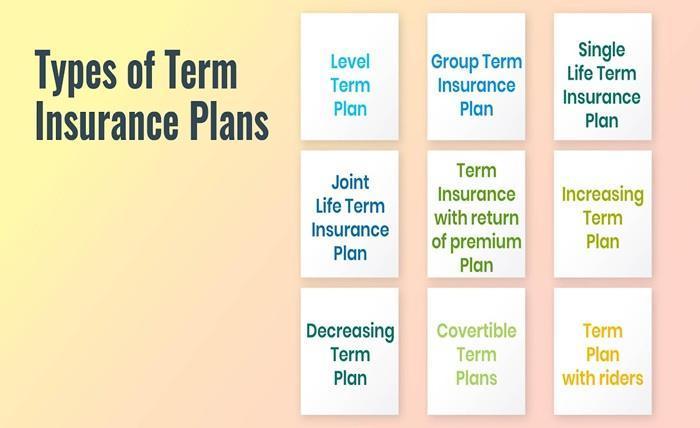
There are several different term plans currently in the market. As a customer, it can sometimes prove to be a daunting task to select the best term plan. Customers often tend to compare premiums of different term plans and neglect a lot of things, which have direct implications on the long-term security of the plan. A good term plan comparison will give you in-depth information on how different term plans work.
Understanding the Structure of Term Insurance Plans
Term insurance plans are pure protection products designed to provide financial security for a fixed period. While the core benefit remains the same across insurers, plan structures and features can vary significantly.
Common plan structures include:
- Level-term plans with fixed sum assured
- Increasing or decreasing cover options
- Return-of-premium variants
- Plans with optional riders for added protection
Understanding these structures helps you identify which type best suits your personal and financial situation.
Key Factors to Compare When Evaluating Plans
An effective comparison focuses on value and reliability rather than price alone.
Important parameters to assess include:
- Sum assured adequacy based on income and liabilities
- Premium affordability over the long term
- Policy tenure aligned with financial responsibilities
- Inclusions, exclusions, and rider availability
Comparing term insurance plans on these criteria ensures the policy provides meaningful protection when it is actually needed.
Evaluating Insurer Credibility and Claims Experience
A policy is only as good as the insurer backing it. Claim settlement efficiency plays a crucial role in determining whether your family receives timely financial support.
When assessing insurers, look at:
- Claim settlement ratio over multiple years
- Simplicity and transparency of the claims process
- Financial stability and market reputation
- Quality of customer support
Reliable insurers combine strong financial fundamentals with consistent claims performance.
The Role of Policy Features and Fine Print
Beyond headline benefits, policy wording defines how coverage works in real scenarios. Seemingly minor clauses can have a major impact during claims.
Pay close attention to:
- Waiting periods and exclusions
- Conditions for rider payouts
- Premium payment flexibility
- Grace periods and revival options
Careful review ensures your chosen plan offers clarity and certainty, not surprises.
Conclusion: Choose Based on Fit, Not Just Price
In the process of comparison between term insurance schemes, it’s essential that you emphasize relevance over rankings. The best scheme would thus be one that matches your earnings, stage in life, future commitments, and gets backing from a trusted company with a clear policy. By being methodical in your process, you’re sure to choose a scheme that helps ensure a secure financial future for your family.