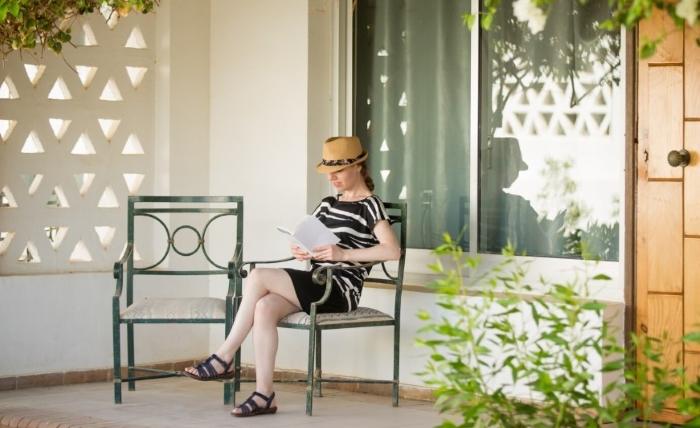
A patio does not have one fixed mood. Its light shifts, surfaces warm and cool, and the sounds beyond its edge change as people move through the day. Shade makes those changes easier to notice. Rather than turning an outdoor area into another indoor room, it can give you a comfortable place to experience the passing hours.
Morning: a gentle start
Early in the day, a shaded patio can feel like a pause between the house and the garden. The air may still be cool, while sunlight reaches across the lawn or catches the tops of nearby plants. Under cover, a table becomes a natural place to put down a cup, open a book or sit for a few minutes before the day gathers pace.
The direction the patio faces matters. Morning sun can be welcome in a cooler season but bright on a summer day. If the shade covers only part of the area, people often find themselves choosing a seat by the light rather than by the furniture arrangement. Watching where the sun falls at breakfast time can reveal more than a plan viewed indoors.
There is also a difference between shade overhead and shade at eye level. A roof may keep direct light off the table while low sun still reaches someone seated beneath it. Trees, screens or the position of a wall can change that experience. None needs to shut out the morning entirely; the appeal is often in having a choice.
Late morning: the patio becomes useful
As the sun climbs, the patio may become a practical extension of everyday routines. It can be a spot to sort herbs from the garden, work through a small task or share a slow weekend breakfast. Shade helps define the space without requiring everyone to retreat inside as soon as the light grows stronger.
This is when the feel of the ground becomes noticeable. Pavers, decking and outdoor rugs each respond differently to sun and shade, and nearby walls may reflect light or hold warmth. A patio that looks inviting from the kitchen door is not necessarily pleasant in every seat. Moving a chair around can show which parts remain appealing as the morning advances.
For many Australian homes, outdoor comfort also depends on airflow. A covered area can feel open and pleasant when breezes pass through, yet still or enclosed when surrounding screens block them. Planting and privacy features work best when considered alongside ventilation, especially if the patio is expected to host meals rather than just brief visits.
Midday: shade has a job to do
Near the middle of the day, the contrast between covered and uncovered space is usually clearest. A patch of shade may make it more appealing to linger over lunch, although it does not remove heat from the air or replace sensible sun protection. On particularly hot days, going indoors may still be the more comfortable choice.
Different kinds of cover create different midday experiences. A fixed roof casts a more predictable area of shade. A pergola with planting can break up the light and bring greenery close to the table, though its coverage may vary with the season. An adjustable louvre roof installation lets you change how much light enters. Look at the shade it will cast beside the house, and ask how the system handles ventilation, drainage and upkeep.
Midday also tests the practical details that photographs rarely capture. Is there enough room to pull out a chair without stepping into full sun? Does a breeze lift loose napkins? Can someone carry food from the kitchen without navigating crowded furniture? Those small interactions often determine whether the patio is used regularly or reserved for occasional gatherings.
Afternoon: the light moves sideways
Later, the challenge shifts from overhead sun to light arriving at an angle. A roof that works well at noon may leave one side of the table exposed by mid-afternoon. This is a useful time to notice shadows from fences, neighbouring buildings and trees. Their patterns may offer welcome shade or leave an unexpectedly bright gap.
An afternoon patio can also become a quieter place. Children might spread out a game; someone else might sit nearby without joining in. Shade gives each activity a setting, but flexibility matters more than a perfect furniture layout. Lightweight chairs and a clear patch of floor make it easier for the space to change with whoever is using it.
Seasonal changes deserve attention here. The path of the sun is not identical throughout the year, and a favourite shady corner in summer may feel quite different in winter. Before settling on permanent screens or dense planting, it helps to observe the patio at several times of day and, if possible, across seasons.
Evening: the space softens
As direct sunlight fades, shade becomes less about shelter and more about atmosphere. The covered patio may hold the last warmth of the day, or it may cool quickly when a breeze arrives. Either way, its connection to the outdoors stays present: leaves move, birds settle, and the garden gradually becomes harder to see.
Evening use asks different things of the space. Gentle lighting can help people see a meal or find a step without making the patio feel harshly lit. Where insects are common, everyday habits such as clearing plates and managing standing water may make sitting outside more pleasant. Warm layers can be more useful than trying to make every evening feel like summer.
The best measure of a shaded patio is not whether it feels the same from breakfast to nightfall. It is whether it offers somewhere worth returning to as conditions change. A morning coffee, an afternoon conversation and a quiet moment after dinner can all happen in the same place, each with a different view of the day.