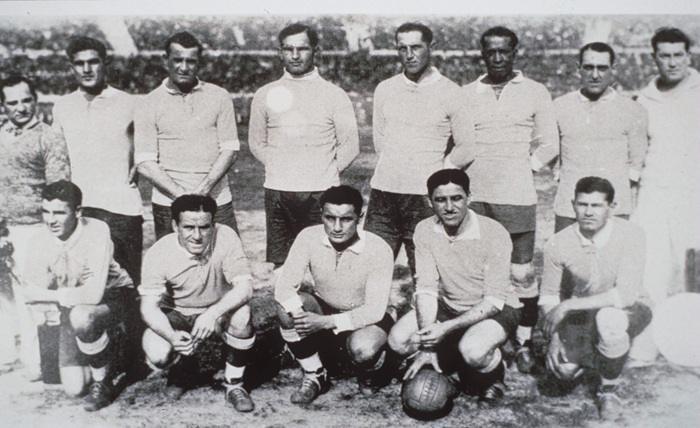
The first World Cup in 1930 was played in a different era of fitness, formations, and refereeing, but many of the patterns you see in modern tournaments are already visible if you know where to look. When you re-watch those games, or study extended highlights, reading the structure behind the apparent chaos helps you connect early tournament football to the pressing, spacing, and chance creation you see in today’s biggest matches.
Why the 1930 World Cup Still Matters for Live Match Viewers
The 1930 World Cup in Uruguay was the first time national teams gathered in a central location to contest a global title, and that context shaped match intensity and game states in ways that still echo today. Travel fatigue, unfamiliar opponents, and home advantage combined to produce wild swings in momentum that resemble what you see when teams now cross continents for major tournaments. When you watch those matches, you are effectively watching the blueprint for how crowd energy, tactical familiarity, and tournament pressure interact, which is the same blend you must read when following any modern World Cup game.
How the 2-3-5 Formation Changes What You See
Most sides in 1930 used variations of the 2-3-5, with two defenders, three half-backs, and five forwards spread across the front line. That structure created enormous gaps between the defensive line and the forwards, so you often see long spells where midfielders chase second balls rather than controlling possession in compact blocks. When you watch those games with a modern eye, focusing on how often the half-backs are pulled out of position and how quickly the ball returns to the attacking line gives you a clearer sense of why the matches feel stretched compared with today’s more compact 4-3-3 or 4-2-3-1 shapes.
What the Uruguay–Argentina Final Reveals About Contrasting Styles
The final between hosts Uruguay and Argentina offered two distinct takes on the 2-3-5: Uruguay emphasised organisation and short passing, while Argentina leaned more on flair and individual dribbling. In extended footage, you can see Uruguay’s inside forwards dropping to connect midfield and wings, keeping the team compact, while Argentina’s forwards often remain higher, which creates more space but also leaves gaps when they lose the ball. When you watch this match, paying attention to how often Uruguay recover their shape after losing possession versus how frequently Argentina’s lines become stretched helps you link on-pitch discipline to the eventual 4–2 scoreline.
Comparing 1930 Tournament Patterns to Modern World Cups
When you compare 1930 to more recent tournaments, the biggest visual difference is the spacing between lines, yet the core logic of controlling central areas and managing transitions remains the same. In 1930, central overloads are created through numbers—extra bodies around the ball—whereas modern sides often generate similar dominance through shorter distances and more coordinated pressing triggers. When you watch both eras side by side, noticing whether dominance comes from sheer volume of attackers or from compressed distances between units helps you recognise the same underlying principles dressed in different shapes.
How to Read Early World Cup Matches While You Watch
Because the camera angles are wider and the tempo less explosive than modern broadcasts, you have more time to track full-team movement in 1930 footage. One way to read these games is to focus on three recurring sequences: how teams defend crosses, how they contest second balls after clearances, and how they reorganise after losing possession. When you follow those patterns over 90 minutes, your eye becomes trained to see the same behaviours in modern matches, where the speed is higher but the underlying questions—who controls width, depth, and central spaces—remain constant.
To turn that into a repeatable habit whenever you watch historical or live tournament matches, you can follow a simple sequence in real time. First, take note of the starting shape during goal kicks and restarts, because that reveals the base formation before the chaos of transitions. Second, track the distance between the deepest defender and the highest forward when a team attacks, which tells you how much risk they take with their spacing. Third, watch how many players react immediately when possession is lost; counting those first three or four steps shows how committed a side is to counter-pressing versus retreating into a block.
If you repeat this process across multiple games, you build an internal template of what “organised aggression” and “passive defending” look like in different eras. That template then helps you recognise when a modern team is genuinely dominating through structure, as Uruguay did for long spells in the 1930 final, or simply benefitting from a brief wave of emotion that may not last. Over time, what once looked like random end-to-end ดูบอลสด goaldaddy becomes a series of predictable patterns that you can anticipate as the match unfolds, making your viewing more deliberate and rewarding.
Why Live Viewing Still Matters More Than Highlight Reels
Highlights from 1930 inevitably focus on goals, brawls, and key incidents, but the most important information for understanding style lies in the long spells between those moments. By watching extended footage rather than only curated clips, you see how often teams reach the final third without creating a clear chance, how they recycle possession, and how frequently they accept long-range shots instead of working closer to goal. Those details mirror what you need to track in modern matches: the volume and quality of attacks that never make the highlights but define a team’s true level.
In a modern context, long viewing sessions—whether full matches or full halves—let you see when a side is consistently building promising situations that do not yet translate into goals. Over a tournament, that distinction between underlying performance and final score is crucial, especially when a team rides a run of narrow wins or painful losses. Watching the first World Cup with that mindset gives you a historical case study in how dominance, resilience, and structural flaws look when you are not distracted by slow-motion replays and instant social media reactions.
How Live Broadcasts and Analysis Tools Sharpen Your 1930 Lens
Modern broadcasts give you features—multiple replays, tactical cameras, and advanced metrics—that were unimaginable in 1930, but you can mentally project them onto old matches when you watch. Expected goals, for example, assigns each shot a probability between 0 and 1 based on factors like distance, angle, and type of assist, summarising chance quality rather than just volume. If you imagine xG values when you see a 1930 striker blasting from 30 yards versus heading from close range, you begin to separate memorable moments from truly dangerous chances, which is exactly the habit you want during present-day tournaments.
When you follow modern games live with that framework, especially long sessions of ดูบอลสด, you can track how frequently a side reaches high-value zones such as the centre of the box compared with speculative attempts from distance. Over time, you start to notice that some teams regularly “win” the quality battle even when they lose the scoreline, which suggests their process is stronger than the raw results imply. That same mindset applied retrospectively to 1930 helps you see why Uruguay’s more organised approach, built on compact passing and better shot locations, could outweigh Argentina’s bursts of individual flair over the course of a tense final.
A Simple Table to Map 1930 Match Dynamics
To make the structure of 1930 matches easier to read with a modern eye, it helps to break down typical patterns you might see in three representative game types. The table below offers a simplified illustration of how different contest styles translate to territorial dominance, shot quality, and what you should focus on during a re-watch.
| Match type | Typical formation use | Territory control pattern | Shot profile you should expect |
| Balanced group game | 2-3-5 vs 2-3-5 | Alternating waves of attacks | Mixed range, many headers and scrums |
| Host-dominated fixture | 2-3-5 (host) vs 2-3-5 | Home side pinned high line | Frequent box shots, rebounds |
| Open, end-to-end contest | 2-3-5 vs 2-3-5 | Large gaps between lines | Long shots, breakaway chances |
When you identify which of these patterns a specific 1930 match fits, you can immediately set expectations for what you will see over 90 minutes. A host-dominated fixture will often deliver constant pressure and repeated box entries, so you should pay attention to defensive resilience and goalkeeper positioning rather than just counting shots. In an open, end-to-end contest, your focus should shift to transition defending and recovery runs, because those are the areas where structure tends to break down and results can swing quickly.
Summary
The first World Cup in 1930 offers more than nostalgia; it gives you a live laboratory for understanding how formations, spacing, and game states shape what you see on screen. By watching those matches with attention to the 2-3-5 structure, Uruguay’s organised approach, and the way chance quality differs from sheer shot volume, you train the same analytical habits that make modern tournaments easier to read. Carrying those insights forward means that every time you sit down to watch a big game today, you are better equipped to distinguish sustainable performance from short-term chaos, just as the inaugural champions did nearly a century ago.