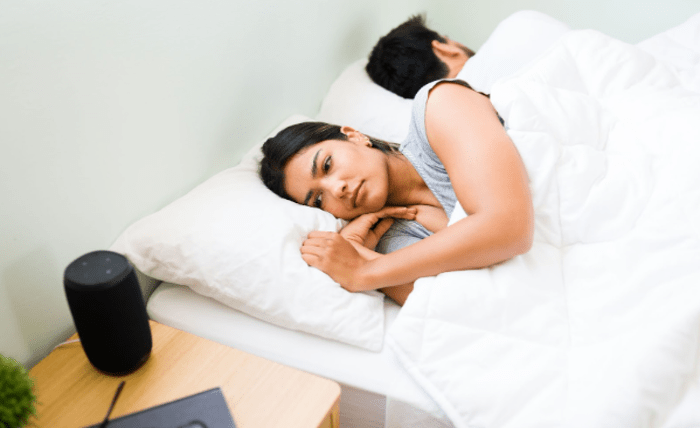
In our modern-day, busy, and frenetic world, stress has become a part of nearly every household. Individuals now work longer hours, they spend too many hours consuming screens, and lifestyle pressure has caused a generation to live on what feels like “empty.” Stress will impact the quality of sleep, meaning when cortisol (the stress hormone) is elevated. There is a signal to the brain that we need to be alert and ready for whatever action might come next; this idea can inhibit both falling asleep and staying asleep, contributing to the quality of sleep, but also adding stress to our system and creating a dizzying cycle of irritability and incapability of focusing on anything.
In 2012, a study published in the Journal of Sleep Medicine found that even moderate stress disrupts the body’s circadian rhythm and delays deep sleep stages, which are imperative for recovery of the body and clarity of thought in the brain. The endless imbalance causes a burden the next morning and can impact emotional regulation, thoughtful decision-making, and overall performance throughout the day.
Sleep Disruption and Implications for Your Health
Not getting enough sleep can be more harmful than it may appear. Disruption of your deep sleep cycles and the amount of deep sleep will impact hormonal systems. This will decrease your testosterone and growth hormone levels, along with its ability to regulate blood pressure. These affecting changes take time to show a declining effect on your energy, motivation, and sexual experiences.
The National Institutes of Health provides information on chronic sleep deficits and how sleep deficit alters the body’s ability to regulate serotonin and dopamine. These chemical agents are related to mood and pleasure response. The loss of regulation can deplete libido, stamina, and even confidence.
In their work environments, especially in professional organizations located in Baner or Koregoan Park in Pune, chronic sleep deficits have become part of the professional vernacular when trying to apply considerable demand of time. In fact, many professionals feel that acting to manage sleep habits in your demographic will allow you to interrupt a continuing pattern of fatigue, loss of focus, and increasing strain over time.
Stress Affects Performance- Physical & Mental
Stress does not remain solely within our heads; it runs through as much as every system in our body. From a physiological standpoint, stress leads to increased levels of adrenaline and cortisol, and blood being directed away from the reproductive organs towards oxygenating the muscles of our body and being taken up by the brain. With time, all of this leads to decreased sexual function, decreased endurance, and concentration.
Stress management techniques that produce stability or balance—such as but not limited to mindfulness, breathing, yoga, or therapy- can reduce your cortisol levels, or in other words, balance out the impact of the stressors. Others may speak to a wellness expert or a sexologist (based in Pune) to explore their deeper mind-body connection and explore the interactions that tend to inhibit optimal and full health in body functioning.
How Sleep and Hormones are Connected
Sleep does so much more than sleep; it is restorative by design. When you drift into deep sleep, a hormone (called HGH) is released by the pituitary gland, which aids in the restoration of the body, in this case, the body’s tissues, muscles, vessels, etc. Also, along with the release of HGH, testosterone levels peak during this phase, both of which restore vitality (both sexual vitality as well). Hormones are only changed in sleep. If parts of the sleep cycle are robbed of slee,p then the hormones cannot get fully restored. If testosterone is not restored, it will decline, thereby having a significant effect on libido and performance (physical and mental).
Implementing a sleep routine, limiting screen time before sleep, and keeping the bedroom cool and dark are some simple yet profound ways to restore hormonal balance. More holistic-type clinics in and around Pune will be focused later on – usually with modifying the sleep sometimes mind in context of typically habitual management, since long-term would not be affected anywhere in a quick-fix way or overnight, etc.
Stress, Sleep & Emotional Well-being
Emotional balance has an important influence on performance in relationships, at work, and in personal life. That emotional balance does have a major impact when stress is high; emotional sensitivity increases, fights seem more like fights, and one’s self-worth is lower. In fact, being sleep deprived amplifies stress levels and emotional reactivity and decreases the ability to think through those emotions.
Research from the American Psychological Association shows that individuals who sleep less than 6 hours a night show higher emotional reactivity and less emotional impulse control. This gives us an important hint that both sleep & emotional wellness impact our overall performance – mental clarity, confidence & connection all rely on rest.
Actionable Strategies to Change the Cycle
The stress-sleep-performance relationship can be regulated through appropriate daily behaviors on your part. Aim to exercise for 30 minutes on most days. Have balanced meals with protein & micronutrients(small. vitamins, minerals, etc.). Try to take breaks to unplug (with the exception of eating, such as mealtime). The less electronic stimulation you have the better, preferably none within an hour of bedtime for you or your child. This signal helps to report back to your brain and body that it is prime time reset without that stimulation from another area.
Hydration is often overlooked as a significant contributor to controlling mood & energy factor. Dehydration will be a negative predictor of which will be negative energy and increase sleepiness, which means further reactivity to stressors.
Reviewing deep breathing, guided meditation, or even just writing in a journal at the end of your daily routine for just five minutes will help manage a self-report of your nervous system.
Most often, individuals ask about professional help when they are seeking a more intense and collaborative approach, as they are looking for greater and deeper interactions & reflection.
A sexologist Pune type of professional support would be helpful in bringing to your attention a greater resource of the interactions in quality, stress relationships, and significance of hormones and assist with collaborative outcomes, as well as sustainable processing outcomes or solutions that will assist you in the development of self-efficacy for confidence.
Conclusion
Poor performance, sleep disturbance, and stress tend to work in a vicious circle, impacting mood, attention, and physical health. Improving the rest improves the balance of hormones, and the balance of hormones with daily functioning is enhanced. Such basic practices as screen time reduction before sleep, relaxation exercises, and a regular routine are significant.
One of the leading sexual health providers in India, Allo Health emphasizes addressing your sleep, stress or intimacy issues with evidence-based therapy, medical consultation & online support. Their medical experts based out of Pune can work both in-person & remotely, so they can help you to be holistically well, without compromising your comfort & privacy.
When you reduce stress, improve sleep, & enhance all performance at the same time, the cycle of fatigue & frustration at night can be changed to fresh energy, clearer focus ,and a daily life that feels good.